
Updated: 2026 Tooling Guide · By Sailwin Mold Engineering Team
How Much Does a Plastic Injection Mold Cost? 2026 Price Breakdown & Calculation
Procuring a plastic mold based solely on the lowest initial quote frequently leads to budget overruns averaging 25% to 40% and unscheduled factory downtime lasting 4 to 8 weeks during initial tool commissioning. When procurement teams ask “how much does a plastic injection mold cost?”, many suppliers quote only the bare steel cavity tooling while concealing critical variables—such as steel heat-treatment certification, hot runner brand tier, cycle-time efficiency, and preventive maintenance wear parts.
After engineering over 1,200 sets of precision injection tooling across rigid packaging, closure automation, and preform manufacturing, Sailwin has analyzed the exact engineering parameters that govern true mold capitalization. In 2026, real-world injection mould cost ranges from $2,500 to $5,000 for a single-cavity prototype, between $8,000 and $25,000 for mid-volume industrial components, and upwards of $45,000 to $120,000+ for ultra-high-output, multi-cavity packaging systems.
This technical guide provides manufacturing executives, toolroom managers, and product designers with an exact cost calculation breakdown—empowering you to calculate real total cost of ownership (TCO) and evaluate quotes with complete transparency.
Key Takeaways
- Tooling Metallurgy Determines Real Cost: Upgrading from pre-hardened P20 steel ($3,000/ton) to vacuum-quenched Stavax S136 stainless steel ($12,000/ton) increases upfront tooling investment by 25%, but extends mold operational life from 300,000 cycles to over 2,000,000 cycles, reducing net per-part tooling depreciation by 65%.
- Cavity Scaling vs. Cycle Optimization: Doubling cavity count from 16 to 32 cavities increases upfront mold investment by approximately 70%, but cuts unit cycle labor and injection machine tonnage overhead in half, typically achieving capital payback within 4.5 months.
- Hot Runner Payback: Specifying an imported needle valve-gate hot runner adds $5,000 – $14,000 to upfront plastic injection molds cost, but eliminates runner scrap entirely, saving up to $14,500 annually in resin and regrind remelt degradation.
Looking for a reliable injection mold maker with transparent pricing?
Send your 3D CAD drawings (STEP/IGS) for a complimentary DFM moldflow report.
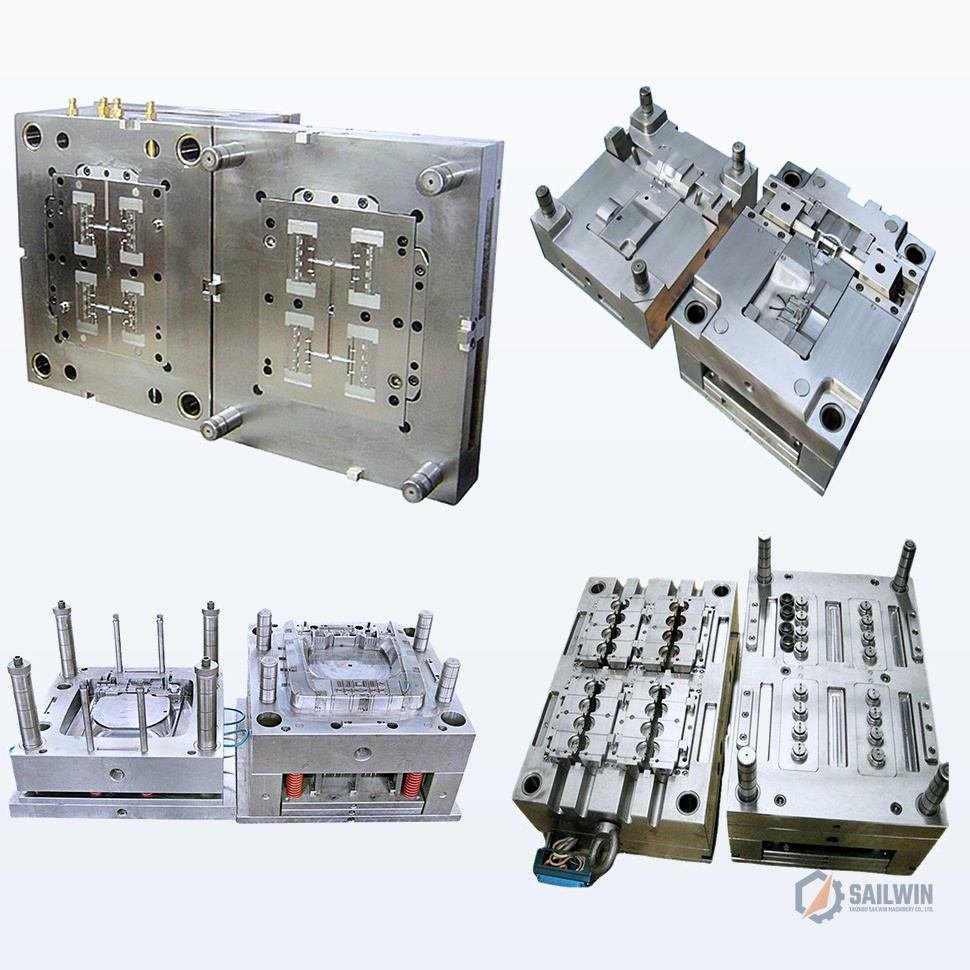
1. What Determines Injection Mould Cost? The 5 Primary Tooling Variables
Injection mould cost is governed by machine tonnage, steel metallurgy, gating architecture, cavity cavitation, and dimensional tolerance precision. Sailwin’s 20-year factory manufacturing data reveals that mold base steel and CNC EDM processing hours represent 75% of total fabrication expense.
1. Part Geometry, Undercuts, and Side-Action Slides
Simple parts that eject along a straight line of draw allow for economical two-plate mold configurations. However, if your product features lateral snap-fits, exterior threads, or recessed hollow handgrips (common on plastic handle bail mold projects), the mold demands mechanical angle pins, slide blocks, or hydraulic core-pulling cylinders. Every independent sliding mechanism adds between $1,200 and $3,500 in engineering, wire-EDM profiling, and precision hand-fitting.
2. Cavity Multiplication & Mold Base Footprint
A single-cavity prototype mold for a container closure may cost $3,800. Transitioning to a high-volume, 32-cavity balanced layout (such as our high-speed bottle cap injection mold systems) elevates the initial mold price to approximately $38,000 – $48,000. However, the 32-cavity mold produces 32 parts in a 10-second cycle rather than 1 part in 15 seconds, collapsing your machine hourly amortization and per-unit production cost by over 80%.
3. Tooling Steel Hardness & Heat Treatment
Molds built from pre-hardened P20 steel (HRC 28-32) offer rapid machinability and lower upfront expense, making them ideal for automotive interior trim or appliance housings. Conversely, packaging molds running abrasive or corrosive polymers (such as transparent PET preforms or medical polypropylene) require vacuum-quenched stainless steels like Stavax S136 (HRC 48-52). High-hardness stainless steel increases CNC cutting and optical polishing hours, but extends tool life past 2,000,000 continuous shots.
4. Gating Architecture: Cold Runner vs. Hot Runner
Cold runner molds are straightforward and economical to fabricate, but generate solid sprue scrap on every cycle that must be mechanically granulated, dried, and re-blended. Integrating an internally heated or valve-gate hot runner system adds $4,000 to $16,000 to the mold price, but eliminates runner scrap entirely, lowers required injection pressure by 20%, and shortens cooling times.
5. Surface Finish & Optical Mirror Polish
Basic EDM textured surfaces (VDI 3400 scale) add zero post-machining labor. Standard SPI B-1 or B-2 paper finishes require minimal manual benching. However, if your application demands diamond optical mirror buffing (SPI A-1 or A-2), typical of cosmetic packaging and valve-gate preform molds, technicians must hand-lap cavity inserts using microscopic diamond pastes for 40 to 80 consecutive hours, adding $1,500 to $4,000 to the tooling invoice.
Evaluating a part drawing with slides or unscrewing threads?
Let our senior tooling engineers review your 3D CAD files for draft angle and parting line optimization.
2. SPI Mold Classification & 2026 Price Benchmark Table
The Society of the Plastics Industry (SPI) defines five distinct mold classifications (Class 101 through 105). Choosing the correct SPI class ensures you do not overpay for low-volume prototypes or buy tooling that fails prematurely during continuous three-shift manufacturing.
Below is the benchmark pricing matrix reflecting real 2026 factory-direct manufacturing costs for precision plastic injection tooling:
| SPI Class | Lifecycle Target (Shots) | Cavity & Core Steel | Cavity Range | Average Tooling Cost (USD) | Typical Delivery Lead Time |
|---|---|---|---|---|---|
| Class 105 | < 500 (Prototype) | 7075 Aluminum / Mild Steel | 1 – 2 | $2,200 – $4,800 | 10 – 15 Days |
| Class 104 | < 100,000 (Low-Volume) | P20 Pre-hardened Steel | 1 – 4 | $5,500 – $12,000 | 20 – 30 Days |
| Class 103 | < 500,000 (Medium Production) | 718H / NAK80 (HRC 36-40) | 2 – 16 | $12,500 – $28,000 | 30 – 40 Days |
| Class 102 | < 1,000,000 (High Production) | H13 / S136 Quenched (HRC 48-52) | 8 – 32 | $26,000 – $68,000 | 40 – 50 Days |
| Class 101 | 1,000,000+ (Ultra-High) | Hardened Stainless (HRC 52-56) | 24 – 96 | $52,000 – $120,000+ | 50 – 70 Days |
For industrial closure production such as flip-top cap mold tooling or high-pressure packaging, purchasing anything below Class 102 inevitably leads to parting line distortion and flashing. Review our field guide on molding flash defect troubleshooting to understand why cavity hardness protects ongoing operational margins.
Unsure which SPI Class matches your project volume?
Talk with our toolroom lead engineer directly on WhatsApp for an honest assessment.
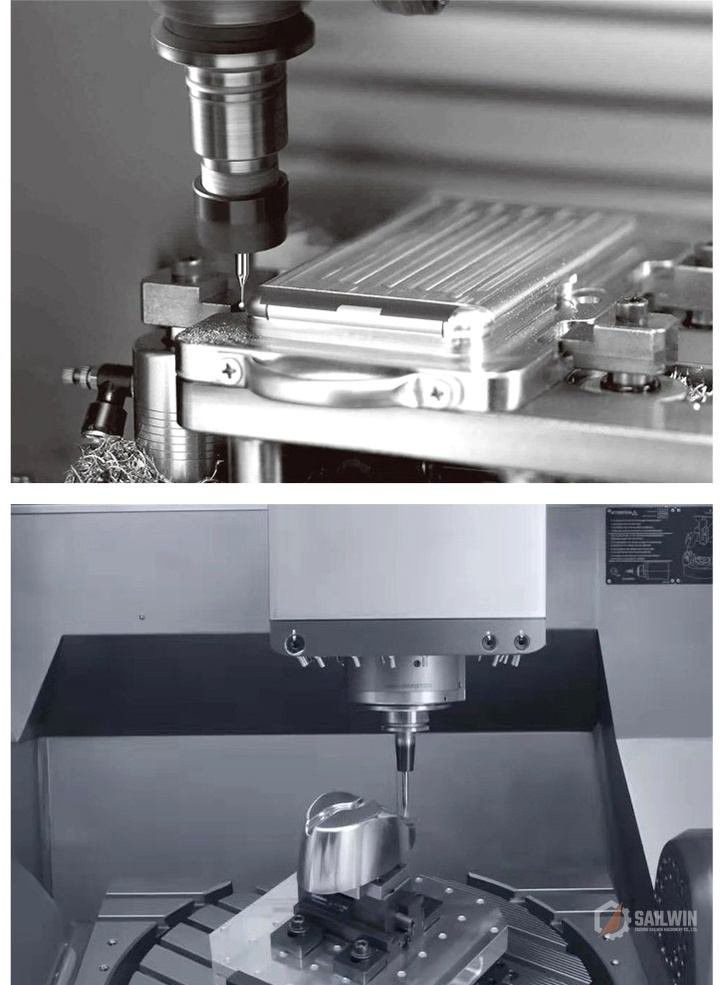
3. Mold Steel Metallurgy: How Material Grade Impacts Total Investment
Tool steel selection represents the primary trade-off between upfront procurement cost and lifecycle maintenance expenditure. Premium tool steels provide enhanced wear resistance, superior thermal transfer, and mirror polish retention.
The table below illustrates the mechanical properties, machinability, and typical cost profile of the primary tool steels used in Sailwin’s mold-building operations:
| Steel Grade | Hardness Range | Corrosion Resistance | Polishability (SPI) | Raw Cost Index | Primary Tooling Application |
|---|---|---|---|---|---|
| P20 (1.2311) | HRC 28 – 32 | Low | SPI B-2 (Paper) | 1.0x (Baseline) | Structural enclosures, prototype molds, appliance frames |
| 718H (1.2738) | HRC 33 – 38 | Moderate | SPI B-1 (Fine) | 1.3x | Automotive interior panels, large crates, logistics bins |
| NAK80 | HRC 37 – 43 | Moderate | SPI A-2 (High Polish) | 2.2x | Transparent consumer lenses, medical housings, electronics |
| S136 (Stavax ESR) | HRC 48 – 52 (Quenched) | Superior (Stainless) | SPI A-1 (Optical Mirror) | 3.8x | Beverage caps, preform cores, corrosive medical resins |
| H13 Premium | HRC 46 – 50 | Moderate | SPI B-1 | 2.8x | High-thermal-shock cores, thin-wall food packaging |
When building specialized tooling such as an oil spout cap mold or complex medical child-resistant cap mold, opting for S136 is indispensable. The corrosive nature of volatile additives and continuous shear friction will erode non-stainless cavities in less than six months of continuous cycle production.
Demand certified European or Japanese tool steel for your molds?
Sailwin provides full material traceability certificates and vacuum heat-treatment hardness reports with every tool.
4. Cold Runner vs. Needle Valve-Gate Hot Runner: Lifecycle ROI Analysis
Specifying a needle valve-gate hot runner increases initial tooling capital by $5,000 to $15,000, but completely eliminates solid runner scrap and reduces mold cycle time by 20% to 35%, generating rapid operational payback.
To illustrate why high-volume producers avoid cold runners, consider an annual production run of 15,000,000 units of 28mm PCO1881 beverage caps molded in polypropylene (PP) on a 32-cavity mold:
- Cold Runner Architecture: A solid three-plate cold runner adds approximately 1.4 grams of scrap per shot (0.043g amortized per cap). While regrind can be remelted, thermal degradation alters polymer melt flow index (MFI), increasing cap warpage. Furthermore, the thick cold sprue requires 4.2 seconds of additional cooling time, limiting production cycle speed to 14.0 seconds. The annual electrical consumption and machine overhead penalty exceeds $16,800.
- Needle Valve-Gate System: Molten resin is delivered directly into the top of each cap cavity through individual pneumatic needle shut-off pins. There is zero runner waste, gate vestige is held beneath 0.05mm, and cycle time drops to 9.2 seconds. The initial $11,000 hot runner surcharge delivers complete capital payback in less than 90 operational days.
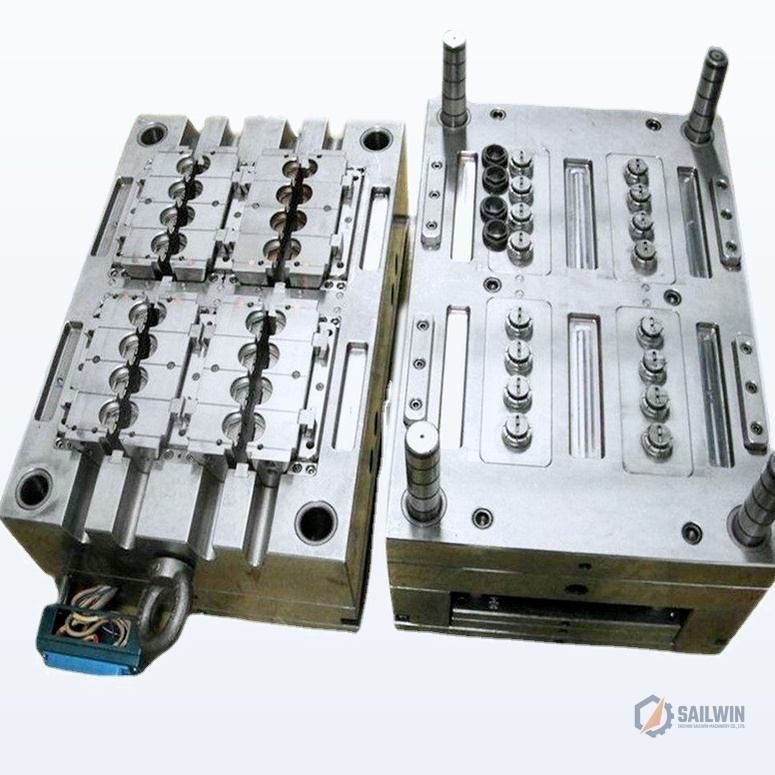
Need a balanced hot runner manifold calculation for your bottle caps?
We calculate thermal balancing, gate freezing time, and pressure drop per cavity free of charge.
5. Sailwin Case Study: Beverage Closure Producer Cuts Unit Tooling Cost by 35%
A prominent Middle Eastern water packaging plant upgraded from older 16-cavity cold-runner molds to Sailwin’s 32-cavity balanced valve-gate tooling, cutting cycle times from 18 seconds down to 9.5 seconds while saving $42,000 in annual resin waste.
- Client: Bottled water and beverage company located in Riyadh, Saudi Arabia.
- Existing Tooling: Two sets of 16-cavity P20 cold runner molds running on 200-ton injection machines.
- Pain Point: Mold parting lines developed severe flash after 450,000 cycles; cycle time was stuck at 18.2 seconds with 4.5% scrap rate.
- Tooling Redesign: Engineered one 32-cavity high-speed mold using vacuum-heat-treated S136 stainless steel (HRC 52).
- Hot Runner: Integrated a 32-drop pneumatic valve-gate hot runner system with balanced circular manifold channels.
- Downstream Automation: Linked to our rotary cap assembling machine and cap lining and wadding machine cells.
- Cycle Time: 18.2s → 9.5s (47% speed improvement)
- Scrap Rate: Reduced from 4.5% to under 0.15% (zero cold runner waste).
- Tooling ROI: Full capital recovery of the $48,000 mold purchase achieved within 5.2 months of commissioning.
Data source: Sailwin customer production log, 2025-2026. Closure type: 28mm PCO1881 lightweight water cap. Tooling model: SW-CAP-32VG.
Want similar 45%+ cycle time improvements on your cap molds?
Request a turnkey tooling proposal including machine tonnage matching and moldflow analysis.
6. Hidden Costs in Overseas Mold Procurement (And How to Avoid Them)
Low-ball tooling bids frequently exclude post-machining validation, sample freight, and critical wear components. Clarifying full scope in the initial RFQ protects your project schedule and budget.
When comparing supplier quotations between Asian toolmakers, European moldmakers, and domestic shops, ensure you verify the four most common omitted expense items:
Watch Out for Unquoted Tooling Extras:
- Engineering Change Orders (ECO): If 3D part models are not frozen prior to steel cutting, engineering change charges can escalate rapidly. Always complete moldflow simulation and DFM review beforehand.
- Trialing & CMM Inspection (T0/T1/T2): Ensure the quote explicitly covers trial machine time, resin pellets, full CMM 3D optical dimensional reports, and international express air freight for sample parts.
- Critical Spare Parts Package: Industrial packaging molds operating at 10-second cycles require spare sets of ejector pins, heating bands, core cooling water baffles, and seal rings shipped inside the mold crate.
- Export Packing & Anti-Rust Treatment: Ocean freight demands deep anti-rust oil immersion, vacuum foil packaging, and heavy ISPM-15 fumigated wooden shipping crates.
Routine mold maintenance protocols, especially for hot runner manifolds, are essential for preserving tool precision. Refer to our operational guide on PET preform hot runner maintenance to maximize cavity life.
7. Frequently Asked Questions: Plastic Injection Mould Cost
Have a technical question not covered in our FAQ?
Contact our engineering desk for immediate guidance on tolerances, resins, or gate locations.
8. Summary: Optimizing Your Tooling Investment
An injection mold is an asset that directly determines your per-unit profit margin, cycle efficiency, and finished part quality. Balancing upfront tooling capital against lifecycle parts durability is the foundation of profitable injection manufacturing.
- Choose mold steel hardness based strictly on planned production volume: P20 for <300k parts; S136 for continuous multi-million cycle packaging.
- Incorporate valve-gate hot runners on all parts exceeding 500,000 annual volume to eliminate scrap and lower cycle times.
- Demand comprehensive DFM reviews and complete steel certification prior to cutting tool steel.
SAILWIN TOOLING · FACTORY DIRECT
Ready to Calculate Your Exact Mold Cost?
Upload your 3D CAD product models (STEP / IGS) or send physical sample drawings. Our senior mold engineers will perform a complimentary Moldflow simulation and deliver a comprehensive tooling quote within 24 hours.
Explore Tooling Systems & Technical Capabilities:
• plastic injection molds – Comprehensive industrial tooling range from single prototype to 96 cavities.
• valve-gate preform molds – High-speed PET preform tooling with sub-0.08mm eccentricity control.
• bottle cap injection mold – 1881 & 3025 beverage closure molds with cycle times under 9.5 seconds.
• flip-top cap mold – In-mold closing butterfly hinge tooling systems.
• rotary cap assembling machine – Downstream high-speed multi-piece cap assembly cells.
• cap lining and wadding machine – High-speed rotary die-cutting liner insertion units.
• Need dedicated assistance? Contact our tooling engineers for personalized DFM consultation.

